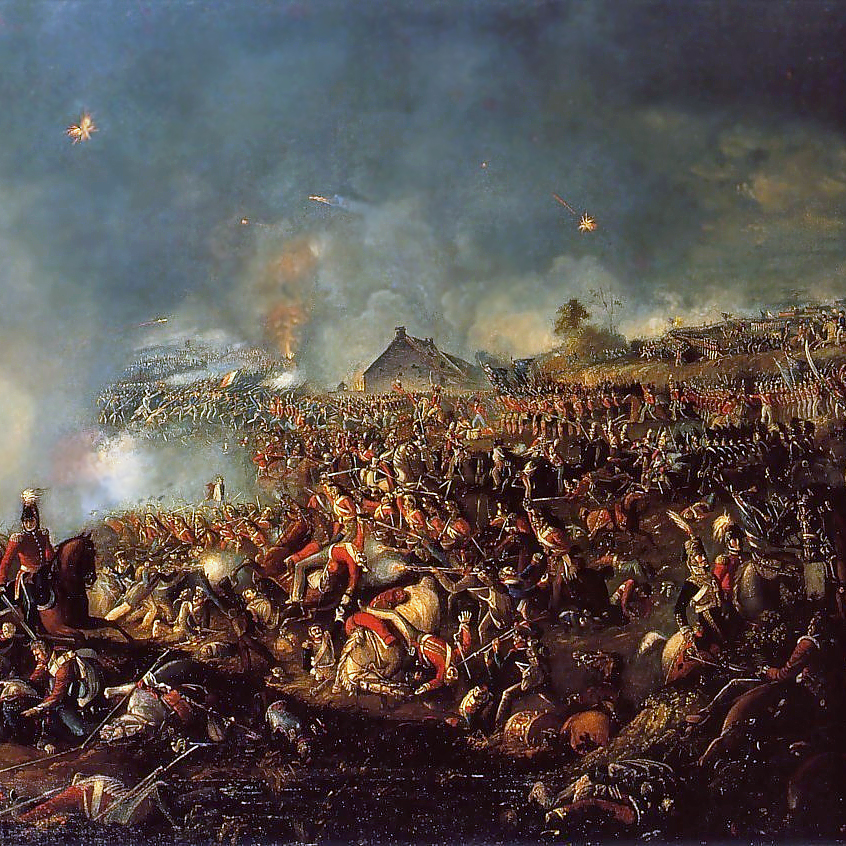
The Great Britain was still the major power in the World by its dominance over seas since Elizabeth. He had consolidate his dominance with the invention of steamboats. The first steamboat started its journey in 1813 and it was not after too long that Chinese people saw iron ships at their shores with immense destructive power in 1841. United Kingdom had enjoyed his dominance over seas with these steamboats while Chinese people suffered under bombard of this power.
They were fast, strong and suitable for long journeys. Of course the other imperial Powers converted their navies from sails to coal however steamboats had a minor disadvantage. Coal as a fuel was too heavy for long journeys and it could not be refuelled without harbours. United Kingdom, The Empire on which the sun never sets, became more powerful overseas, since he had a harbour under control almost every meridian.
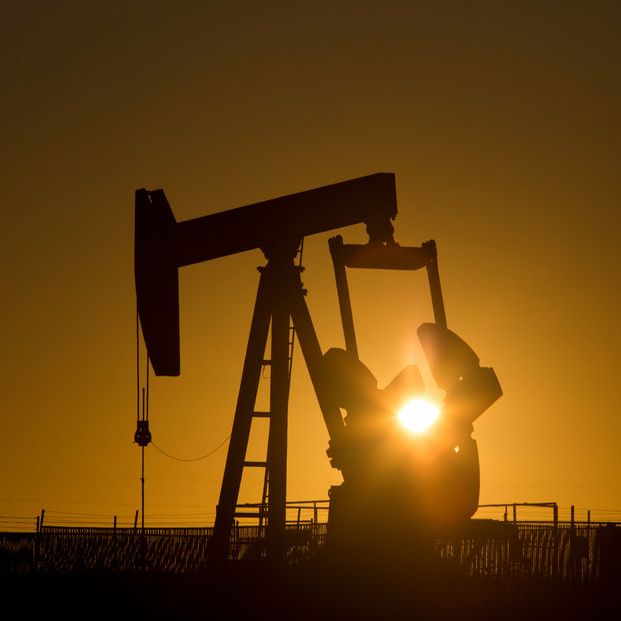
In 1847, Scottish chemist James Young noticed a natural petroleum noticed a natural petroleum seepage in the Riddingscolliery at Alfreton, Derbyshire from which he distilled a light thin oil suitable for use as lamp oil, at the same time obtaining a thicker oil suitable for lubricating machinery. This material with its high energy capacity led new inventions.
In the early years of the twentieth century, Admiral John Fisher (known as an "oil maniac"- an assignation that he welcomed), Britain's First Sea Lord from 1904 to 1910, emerged as a vigorous proponent of oil as an alternative fuel for the navy. He had a huge influence on the Royal Navy in a career spanning more than 60 years, starting in a navy of wooden sailing ships armed with muzzle-loading cannon and ending in one of steel-hulled battlecruisers, submarines and the first aircraft carriers. The argumentative, energetic, reform-minded Fisher is often considered the second most important figure in British naval history, after Lord Nelson.
He wrote in 1902, "It is a gospel fact...that a fleet with oil fuel will have an overwhelming strategic advantage over a coal fleet." This was considered a high-risk strategy, due to the abundant domestic coal but absence of domestic oil at that time. Additionally, the use of coal had become embedded within the tradition of the Royal Navy. British coal fuelled British ships.
On the other part of the world, the Spanish – American War of 1898 showed that US Navy is not suitable for battles far from continental shores. It was not suitable for United Kingdom to convert its navy from coal to oil, because they had not their own reservoirs. However in the early 1900's vast numbers of petroleum reservoirs were found in America and many private companies invested on them.
On July 2, 1910, as the Navy converted from coal to oil-burning ships, President William Howard Taft established three Naval Petroleum Reserves
During World War I, a single oiler refuelled 34 destroyers in the mid-Atlantic – introducing a new era in maritime logistics.
“When the U.S.S. Texas was commissioned on March 12,1914, she was the most powerful weapon in the world, the most complex product of an industrial nation just beginning to become a force in global events,” notes one historian.
Petroleum reservoirs were not the main reason of World War I, however these reservoirs became the most important topic on peace conferences and secret agendas. Every imperial states United Kingdom, Germany, France had to convert their navies however they lacked of reservoirs. United States of America was the only imperial power with reservoir, however vast number of these were under the control of private companies and the amount of it was not enough.
This conversion on Navies started the never ending Oil (Energy) Wars. It was not restricted with only reservoirs but with the lands strategic for transportation of petroleum.