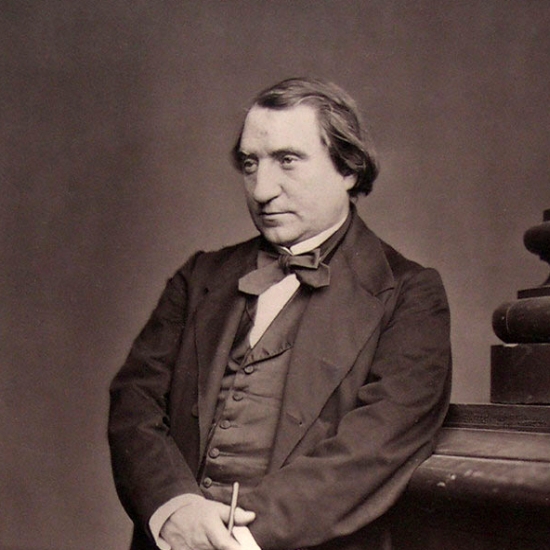
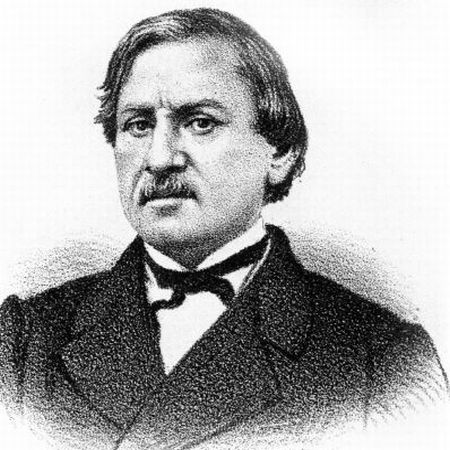
Joseph Ernest Renan was born in 28.02.1823 in Treguier, Brittany into a lower middle class family. His dad died when he was 5 years old and his sister Henriette had took care of him during his life. He participated to catholic school in Brittany. However, when Henriette moved to Paris as a teacher she brought Renan to Paris. Renan was brilliant student and was not studying only on theology, he also studied Hebrew, Aramaic and German Philosophy in Paris. These studies led to first crack in his religious sensibility. He began to question his vocation for priesthood.
For a young scholar in the late 1840s he choosed philology as a new career for himself. Philology was the queen of the sciences. Since the work of Friedrich August Wolf in the late eighteenth century, research into words and the relationships betwen them had been a prestigious discipline and was viewed as the most exact of the human sciences. Philology had also dealt a fatal blow to the age-old belief in the devine origin of language. For the former seminarian, theoretical linguistics became the decisive secular arm in the destruction of the religous myth that saw language as a gift from the Garden of Eden.
His first study was on the life of Jesus. It was still debateful in our era. Jesus was written as just a human for the first time and all of his miracles were denied. On the other hand Renan claimed Jesus as a Galilean who was transformed from a Jew into a Christian, and that Christianity emerged purified of any Jewish influences. The book was written just as a biography of a historical person and all of its sacred sources was judged such as a controversial historical documents.
Renan's the other influencial study was on nations. In 1882, he gave a lecture in the name of “On the Nation”. Before Renan and especially in late 19th century, nations were defined by ethnicty and race. It was the rising era of nationalism. However, Renan claimed nations based on daily plebicites and desire of people to live together.
“having done great things together and wishing to do more / forgetten many (same)things”
Before his death, he had started to work on the history of Jews. He claimed Jews are not pure race, they were mixed with a lot of races during their exiles. However, the most striking theory was definition of origin of Askhenazi Jews. He asserted that these Jews are descendants of Turkic peoples who had adopted Jewish religion and migrated to Western Europe following the collapse of Khazar khanete.
He finished his study on the origins of Christianity at his 60 and started to work on the history of Jews. Despite his age, he was hardworking man and in his late 60's he said that it was better to study on the history of Greeks instead of both Christianity and Jews because of their enlighment potential. However, he was a researcher and analyst, he never wrote a paper without long time searchs. So he died in his 69 with unfinished study of the history of Jews and with a dream of study in the history of Greeks.