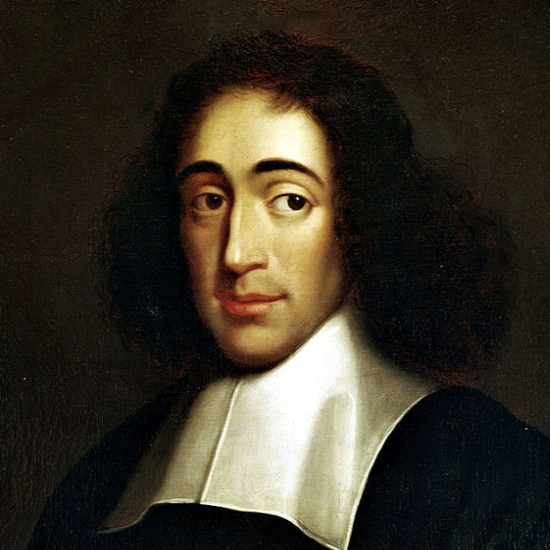
It is hard to define Spinoza in one sentence but may be the most complete definition of Spinoza is rationalist philosopher. On the other side many people describe him as an atheist, pantheist, timid, first secular historian, heretic, well-educated. It is better to know intellectual life in Amsterdam in early 17th century in order to understand and read Spinoza.
Protestant Seven Provinces of the Low Countries (Netherlands) had begun revolt against to Roman Catholic King Philip II of Spain in 1568. Though it seems like Protestants had revolt against Catholics, it is better to read this like merchants, guilds and artisans had revolt against feudal. People had begun to defend liberty and independence, they did not want to share their profits with churches and feudal. On the other side this demand had begun to change society too, and the golden age of Dutch had begun. We can describe this period like the triumph of arts, philosophy and especially the commerce in Low Countries. Amsterdam was one and the most important city of these Seven Provinces. Though majority of population was protestant there was a Jewish minority which no one can not underestimate their numbers. Most of them were Sepherdic and Marranos (publicly converted to Christianity however live as a Jew secretly) Jews who migrated from Spain and Portugal at the end of 15th century. It is free to be a Jew in Amsterdam but forbidden to worship in public. It was great independence for Jews at those times. Especially for merchants and bankers. Jews are very important in commercial life of Amsterdam.
Spinoza's father was Sephardic merchant too. Spinoza was born in 1632 in Amsterdam. He studied and learned Descartes, Manasseh Ben Israel, Grotius and Maimonides. His father died in 1654 and left many depts behind him because of the plunder of his ships by pirates.
In 1656, Spinoza entered the scene of history by excommunication. Jewish community excommunicated him and forbid to Jewish community to talk, share food or something else with Spinoza. This process was not the new one for Jews, it had been practiced many times during the last century. Though the most famous example is Uriel Da Costa's case (He was excommunicated because of his denial to immortality of spirit.), there were several cases most of them caused financially. It is still debatefull Spinoza was excommunicated because of whether his opinion like Da Costa, he denied immortality of spirit too, or taxes and depts which were inherited from his father.
However, 3 years after his excommunication, Spanish sea captain and monk independently reported Jewish meetings where Spinoza and the other heretic Juan de Prado existed. One logical theory claims that Spinoza want his excommunication by himself in order to get rid of dept and taxes and the decision of excommunication was not announced publicly.
He moved to The Hague in 1670. He lived with Collegiants and had good relations with many protestant group and sects like Quakers etc. and with Jews.
In 1670, he wrote Tractatus Theologico-Politicus where he claimed;
- True knowledge can be just mathematical and none of holy books give such information.
- Holy books should be considered in their ages, they cannot be timeless.
- Holy books do not show how God is interested in human affairs. They show how people use religion in order to be interested in human affairs according to their interests.
- Holy tradition and practices are ceremonial. Especially Jewish ones are unnecessary. Christian practices can go on since they are useful to combine people.
- Divine Rule = Nature Law
- Miracles are instants of suspending of Natural Rules so they cannot be true.
- Language which was used in Holy books, had been changed so we can not understand messages. The only true language is Geometry. (Remember The Contact)
- If the old testament was written by Moses how it could tell the death of Moses. It was the famous question before Spinoza, many of scholars claimed it as Miracle whose possibility was denied by Spinoza before. Maimonides had tried to rationalist question, however religion is not rationalist in its essence so it is useless to try it.
- Who wrote it? Why wrote it? What would be done with it?
- The history of world is not only Jewish and Roman?
If both of them written by human, and many many years ago, than there is need to answer present human affairs. So He began to work on his masterpiece Ethics. Religion is a tool to produce civil obedience and morality is not necessary for life after death but it is to be recognized. (Adam Smith will take it and go on from here)
He finished his book however, De Witt warned him to not publish it. Republicans were not powerful anymore and statdholder Prince William De Orange began to become more powerful day by day, parallel to this people were not tolerant as old days. France under the command of Prince Conde had being prepared to conquer Lower Countries and republicans were accused to be friend of France. De Witt brothers were brutally lynched by people in 1672.
Though Conde offered to Spinoza reasonable and high rank in his court, Spinoza refused him. Spinoza did not believe that Conde could save him in Paris against fanatics. On the other hand he received an offer from Heidelberg University but again he rejected offer since he believed that they could not tolerate his ideas.
Spinoza did not publish his last work which was written in Latin. He scared. His work was published in 1677 after his death. Ethic was Cartesian philosophy book which try to locate everything geometrically. According to Ethic;
- Everything must have a cause.
- Substance must cause itself to exist.
- So if everything must have a cause, think can be caused by another think and it can be caused by another think, and it goes like that. But in the end there must be one substance caused by itself. Whether it is god or nature.
- There is only an infinite substance, that is, there are no created substances. The infinite substance consists of infinite attributes. Every mode, be it finite or infinite, must be conceived through an attribute. Finally, what other philosophers consider to be “created substances,” such as my mind (as well as my body), are finite modes for Spinoza.
- God / Nature is substance
- Thought and Extension are attributes
- Infinite Intellect and Motion or Rest are Infinite modes
- A mind and a body are finite modes.