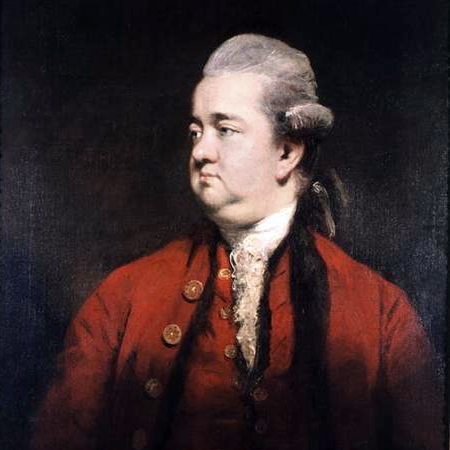
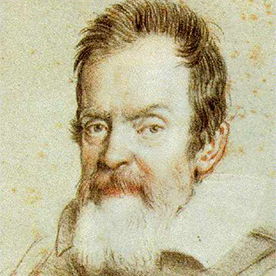
Edward Gibbon was the first Modern Historian with his objective methodology. As Gibbon mentioned in his famous work The History of the Decline and Fall of the Roman Empire
“The theologian may indulge the pleasing task of describing Religion as she descended from Heaven, arrayed in her native purity. A more melancholy duty is imposed on the historian. He must discover the inevitable mixture of error and corruption, which she contracted in a long residence upon earth, among a weak and degenerate race of beings.”
He was searching the facts lies in history not fairy tales. He collected letters, essays and notes of antique observers and had tried to comment them objectively. As a result of his efforts, his glorious work was censored because of its contents which was opposite to the traditional and contemporary doctrines of Christianity and its' rise. Since he concluded the rise of Christianity as a fall of Antiquity and the rise of indulgence and dark middle ages.
Gibbon had summarized the causes of the rise of Christianity in Rome in five subjects. But, unexpectedly none of them were about divinity of Christianity.
I. The inflexible, and, if we may use expression, the intolerant zeal of the Christians, derived, it is true, from the Jewish religion, but purified from the narrow and unsocial spirit, which instead of inviting, had deterred the Gentiles from embracing the law of Moses
II. The doctrine of a future life, improved by every additional circumstances which could give weight and efficacy to that important truth.
III. The miraculous powers ascribed to the primitive church
IV. The pure and austere morals of the Christians
V. The union and discipline of the Christian republic, which gradually formed an independent and increasing state in heart of the Roman Empire.
Gibbon was born in 1737 in England. He had poor health like all of his six siblings and he was the only child of Judith Gibbon who was the wealthy member of Parliament could live. Because of his health problems he could not receive regular education. However, he had private tutors until age of 15. In his 15, Gibbon health improved and his father decided to sent Gibbon Magdalen College, Oxford. He met with rationalist theologian Conyers Middleton (1683–1750) and his Free Inquiry into the Miraculous Powers (1749). In that tract, Middleton denied the validity of such powers; Gibbon promptly objected. As a result of that disagreement, and the influence of French Catholic Bishop Jacques-Bénigne Bousset (1627–1704), and of the Jesuit priest Robert Parsons (1546–1610), Gibbons converted to Roman Catholicism on June 8, 1753. Within weeks, his father, angry because Gibbon's conversion had legally disqualified him for all public service and office, removed him from Oxford and sent him to live under the care and tutelage of David Pavillard, Calvinist pastor of Lausanne, Switzerland. Gibbon later spoke of this change with gratitude, though his circumstances were austere; Pavillard was a kind and competent instructor and helped him to form regular study habits. He studied mathematics and logic and mastered classical Latin literature, as well as becoming familiar with French literature, which became a permanent influence on his style. In Lausanne he met one of his two greatest lifelong friends, Jacques Georges Deyverdun; the other was John Baker Holroyd (later Lord Sheffield). Just a year and a half later, on Christmas Day, 1754, he reconverted to Protestantism.
Gibbon's methodology was so accurate that, to this day, little can be found to controvert his use of primary sources for evidence. While modern historical methodology has changed, his skill in translation of his sources was impeccable, and contemporary historians still rely on Gibbon as a secondary source to substantiate references. His literary tone is old-fashioned, skeptical, and pessimistic; it mirrors both his own character and the topic under discussion, the gradual decay of a mighty empire.
The book is famous not only because its' methodology and well written, Gibbon argued that the reason of the fall of Rome is, Romans had become effeminate, lazy, weak and unwilling to live a military lifestyle with rising Christianity (the other world belief, pacifism of Christianity diminished the traditional Roman martial spirit etc.).
English Giant of the Enlightenment, English historian and Member of Parliament Edward Gibbon died at age 56 in 1794.