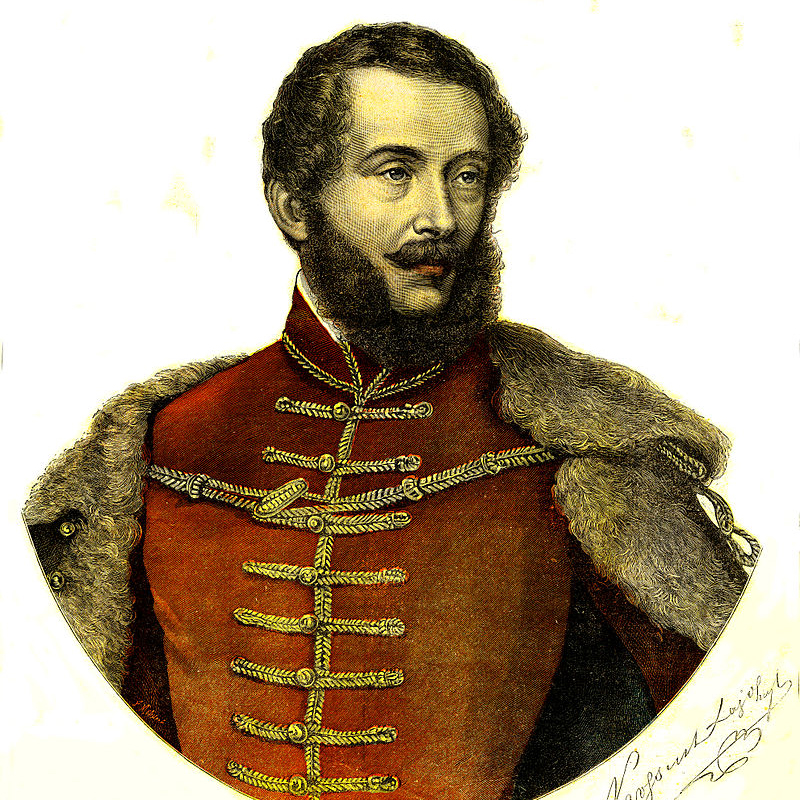
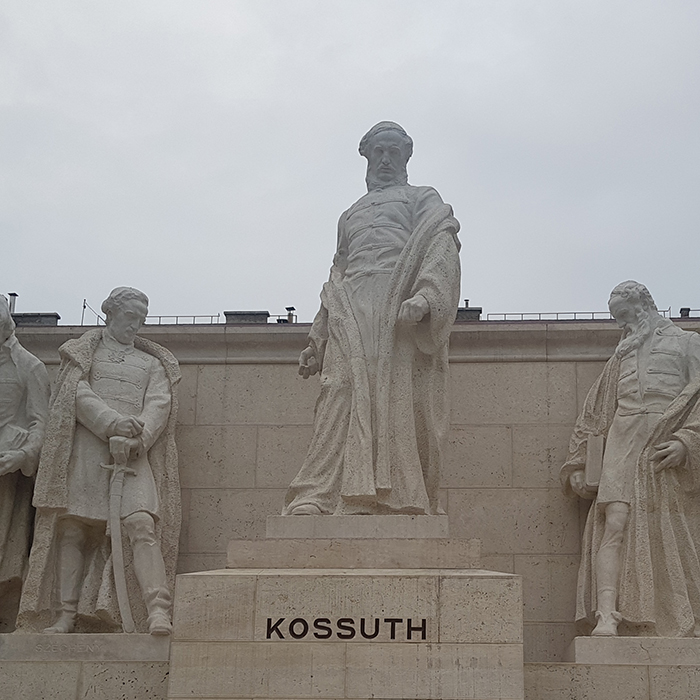
Lajos Kossuth was a Hungarian nobleman, lawyer, journalist, politician, statesman and Governor-President of the Kingdom of Hungary during the revolution of 1848-49. He is one of the main and unforgettable characters of the 1848 revolutions. He lighted the fire of indepency for Hungary.
Eric Hobsbawn summarizes the year of 1848 as
"Hungary was already a more or less unified political entity (‘the lands of the crown of St Stephen'), with an effective constitution, a not negligible degree of autonomy, and indeed most of the elements of a sovereign state except independence. Its weakness was that the Magyar aristocracy which governed this vast and overwhelmingly agrarian area ruled not only over the Magyar peasantry of the great plain, but over a population of which perhaps 60 per cent consisted of Croats, Serbs, Slovaks, Rumanians and Ukrainians, not to mention a substantial German minority. These peasant peoples were not unsympathetic to a revolution which freed the serfs, but were antagonized by the refusal of even most of the Budapest radicals to make any concessions to their national difference from the Magyars, as their political spokesmen were antagonized by a ferocious policy of Magyarization and the incorporation of hitherto in some ways autonomous border regions into a centralized and unitary Magyar state. The court at Vienna, following the habitual imperialist maxim ‘divide and rule', offered them support. It was to be a Croat army, under Baron Jellacic, a friend of Gaj, the pioneer of a Yugoslav nationalism, which led the assault on revolutionary Vienna and revolutionary Hungary. Nevertheless, within roughly the present area of Hungary, the revolution retained the mass support of the (Magyar) people for both national and social reasons. The peasants considered that they had been given their freedom not by the emperor but by the revolutionary Hungarian Diet. This was the only part of Europe in which the defeat of the revolution was followed by something like a rural guerilla, which the celebrated bandit Sandor Rósza maintained for several years. When the revolution broke out, the Diet, consisting of an upper house of compromising or moderate magnates and a lower house dominated by radical country squires and lawyers, had merely to exchange protests for action. It did so readily, under the leadership of an able lawyer, journalist and orator, Louis Kossuth a moderate-radical coalition government reluctantly authorized by Vienna, was an autonomous reformed state, at least until the Habsburgs were in a position to reconquer it. After the battle of Custozza they thought they were and, by cancelling the Hungarian reform laws of March and invading the country, faced the Hungarians with the choice of capitulation or radicalization. Consequently, under Kossuth's leadership, Hungary burnt its boats, deposing the Emperor (though not formally proclaiming a republic) in April 1849. Popular support and the generalship of Görgei allowed the Hungarians to do more than hold their own against the Austrian army. They were defeated only when Vienna in despair called in the ultimate weapon of reaction, the Russian forces. This was decisive. On 13 August the remnant of the Hungarian army capitulated – not to the Austrian but to the Russian commander. Alone among the revolutions of 1848, the Hungarian one did not fall or ever look like falling by internal weakness and conflict, but by overpowering military conquest. It is of course true that its chances of avoiding such conquest after the breakdown of all the rest were zero."
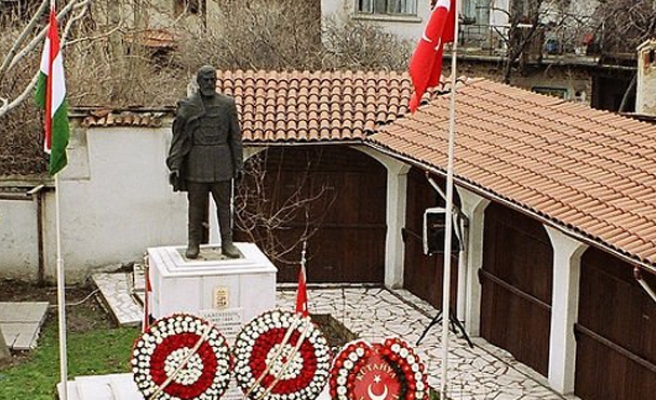
As a result of Russian intervention, Kossuth resigned from Diet and took refuge to Turkey where he lived 2 years in Kütahya. Then he moved to London, Turin and Izmir. His excellence was orating and he spent all of his excelency for the cause of Hungary indepence during his exile.