When you look an archaic Egyptian art it seems absurd and funny. Big headed people (some of them with jackal or bird heads) move like robots. As though they have only few joints. One big guy stands in front of the others who are pictured as dwarfs. They were meaningless for me before reading Ernest Gombrich's book, The Story of Art. I had been assuming Egyptian artists were not capable in drawing and perspektive. At last they were archaic and had lots of things to learn and experience.
When I read the causes and principles of these paintings they have fascinated me. First of all, all of these paintings had an objective which definitely was not aesthetic. As even still many people believe in the forces of images, these images were used in Egypt because of their forms. For example, forms were required for souls in their rebirths. As a result images should be realistic and show the exact characteristics of forms. This leads two main principle. Geometrical regularity and keen observation of nature.
It was not for aesthetic so images on painting do not needed to be drawed from same perspektive. They should be in geometrically ordered in their own singular perspektives. And this is not easy.
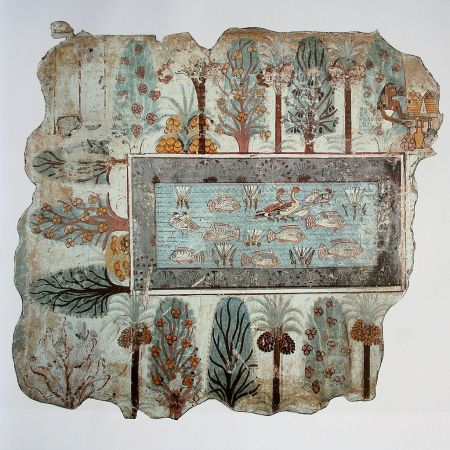
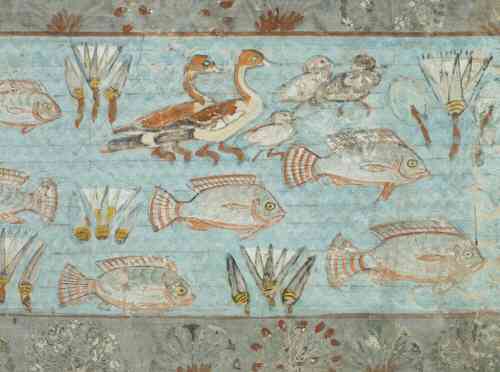
The paintings which were founded in 1820 on the west bank of the Nile Thebes are good examples for these principles. These paintings were decorating the Tomb of Nebamun who was a middle-ranking official scribe and grain counter at the temple complex in Thebes. In the painting of garden, all of trees are could be seen clearly only from the sides while the pond is from above. Since the best characteristics of trees can be noticed from side painter preferred. The best way in showing charachteristics of pond is drawing from above while fishes and birds in the pond were drawn from side.
If you look an ordinary Egpytian man figure, you'll see the head was drawn in profile and eye on it from the front. Accordingly, a full-face eye was planted into the side view of the face. The top half of the body, the shoulders and chest, are best seen from the front, for then we see how the arms are hinged to the body. But arms and feet in movement are much more clearly seen sideways. That is the reason why Egyptians in these pictures look so strangely flat and contorted. Moreover the Egyptian artists found it hard to visualize either foot seen from the outside. They preferred the clear outline from the big toe upwards. So both feet are seen from the inside, and the man on the relief looks as if he had two left feet. It must not be supposed that Egyptian artists thought that human beings looked like that.
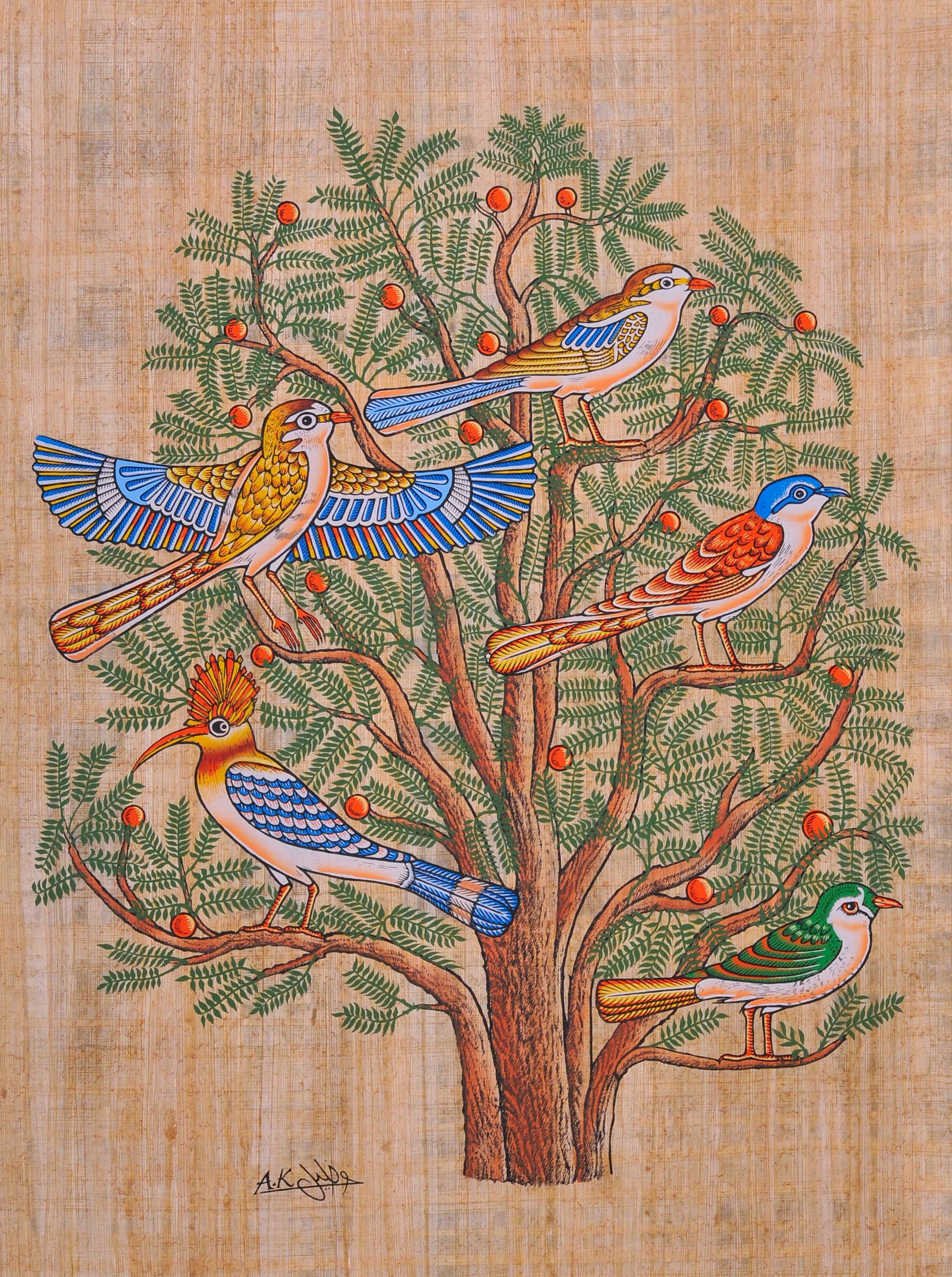
Egyptian artists were great observers of nature. When they were drawing an object they were dividing the body of object, and bringing them together with parts singular perspektive. So when you show an Egyptian bird figure to any zoologist from our time, he can easily define the specie of the bird.
(Taken from The Story of Art - Ernest Gombrich)