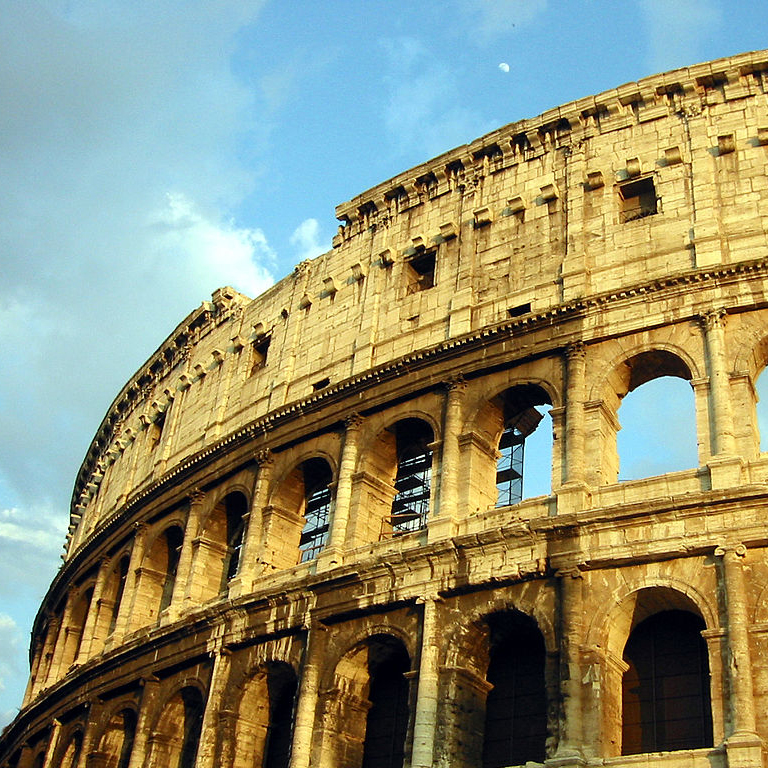
Colosseum was the largest and the most famous amphitheatre ever built in Rome and it was built during Flavian Dynasty era between AD 70 and AD 80.
Who were Flavian Dynasty? How had they been succeeded to the crown?
Rome was not a republic anymore since BC 27 but its power had been gradually increased during first 4 emperor. 5th emperor was Nero and although Rome 's borders were expanded during his reign, Nero was always remembered as mad emperor since its primary goal to rebuild the Rome and Nero's Golden House was at the core of this goal.
Titus FlÄvius Caesar VespasiÄnus Augustus was one of the generals of Nero's army, he had glorious military victories like his role as general of Legio II Augusta during Roman invasion of Britain in AD 43 and subjugation of Judea during the Jewish rebellion AD 66.
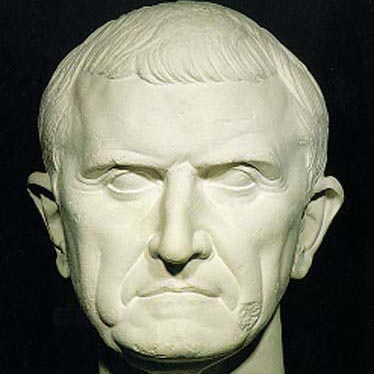
Although people were not happy with Nero, dark days of Rome had begun with the death of Nero. Rome was in chaos after the dead of Nero at AD 68, there were 4 emperors(Galba, Otho, Vitellius, and Vespasian) and that was mean civil war. Vespasian left his son Titus in Judea and he joined forces with Mucianus (governer of Syria) and defeated Vitellius and that was the begining of Flavian dynasty.
Vespasian followed same policy, with Nero, his primary goal was rebuilding of Rome except Golden House of Nero. Vespasian celebrated his victory in Judea with three great monuments. Temple of Peace – Colosseum – Temple of Jupiter.
Construction of Colosseum was started in AD 70 by Vespasian but it was finished by Vespasian's son Titus. With its 189 m long, 156 m wide and 48 m high amphitheatre it had been the largest amphitheatre ever built. It is estimated that 100.000 cubic meter travertine is required for build it. Of course its major hosts are people ( between 50000 – 80000 people) who came to watch gladiatorial contests and public spectacles such as mock sea battles, animal hunts, executions, re-enactments of famous battles, and dramas based on Classical mythology.
Gladiator fights were most common and famous cultural and social event in Rome history. People, from all around the Rome, were coming to Colosseum to watch shows and especially some of them to fight. Gladiators were stars and famous people although most of them were slaves.
Historically it was the Etruscans, a people regulated by a highly ritualized religion, who made it their custom to sacrifice prisoners of war to the shades of their own fallen warriors. Livy says that in 358 bc a total of 307 Roman soldiers were taken prisoner and slaughtered as human sacrifice in the forum of the Etruscan city of Tarquinii (Tarquinia); in revenge 358 captives, chosen from the noblest families of Tarquinii, were dispatched to Rome three years later and publicly flogged in the Forum and then beheaded. The Tarquinienses may have been enacting a form of human sacrifice, but the Roman response - if historical - was an act of vengeance, not cultic obligation.
Whatever its true origins, the first gladiatorial fight took place in Rome in 264 BC, the year when the first war with Carthage began. At the funeral of Decimus Iunius Brutus Scaeva his two sons, Marcus and Decimus Brutus, for the first time exhibited, in the market called Forum Boarium, three simultaneous gladiatorial fights.
These earliest trained killers appeared in the arena as prisoners taken during the war with the Italian allies, the Social War, as it is generally called, of 91 - 88 BC, a n d were chiefly from the Samnites of central eastern Italy, dressed in the heavy, resplendent armour of the Samnite warrior. Soon after the Samnites, Gauls started to appear in the arena. Again these were originally prisoners of war taken from the tribes of Gaul. By about the early seventies BC these two had been joined by a third type of gladiator based on another foreign foe, the Thracian.
Although its most famous Show was Gladitor battles, another popular type of show was the animal hunt, or venatio. This utilized a great variety of wild beasts, mainly imported from Africa and the Middle East, and included creatures such as rhinoceros (gergedan), hippopotamuses, elephants, giraffes, aurochs, wisents (Avrupa bizonu), Barbary lions, panthers, leopards, bears, Caspian tigers, crocodiles and ostriches(deve kuşu). Battles and hunts were often staged amid elaborate sets with movable trees and buildings. Such events were occasionally on a huge scale; Trajan is said to have celebrated his victories in Dacia in 107 with contests involving 11,000 animals and 10,000 gladiators over the course of 123 days.
During the early days of the Colosseum, ancient writers recorded that the building was used for naumachiae (more properly known as navalia proelia) or simulated sea battles. Accounts of the inaugural games held by Titus in AD 80 describe it being filled with water for a display of specially trained swimming horses and bulls. There is also an account of a re-enactment of a famous sea battle between the Corcyrean (Corfiot) Greeks and the Corinthians. This has been the subject of some debate among historians; although providing the water would not have been a problem, it is unclear how the arena could have been waterproofed, nor would there have been enough space in the arena for the warships to move around. It has been suggested that the reports either have the location wrong, or that the Colosseum originally featured a wide floodable channel down its central axis (which would later have been replaced by the hypogeum).
Christinization of Rome had changed role of Colosseum. The last record of gladiator fights is about 435, while animal hunts continued until at least 523. Yet, there are no historical records or physical evidence for the use of the Colosseum as a place of execution for Christians. The idea that many Christians were martyred in the Colosseum, under the persecution of Christians in the Roman Empire is one that is disputed, since ancient Christian records do not record this. However, it may be that "some Christians were executed as common criminals in the Colosseum—their crime being refusal to reverence the Roman gods", although most Christian martyrs of the early Church were executed for their faith at the Circus Maximus.
In 1749, Pope Benedict XIV endorsed the view that the Colosseum was a sacred site where early Christians had been martyred. He forbade the use of the Colosseum as a quarry and consecrated the building to the Passion of Christ and installed Stations of the Cross, declaring it sanctified by the blood of the Christian martyrs who perished there (see Christians and the Colosseum).