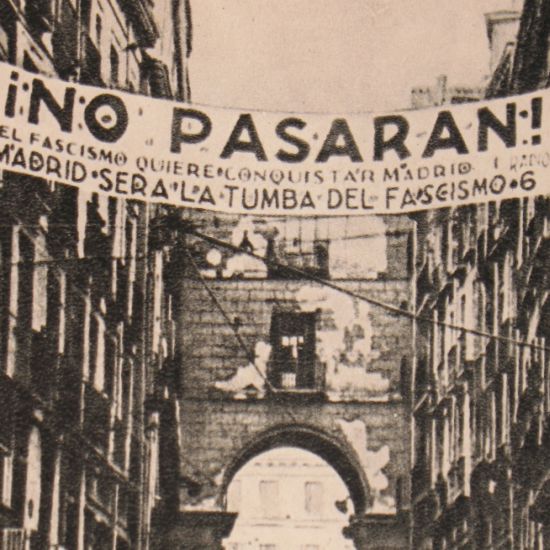
It was the war that the first time civilians were on the target as masses. It was the war against fascism that would have been the last one if they could win.
One of the strongest empires that World ever had seen, Spanish Empire, had collapsed in 1898. There were several different social and economic classes in the ruins of Empire under the monarchy.
During the first decades of 19th century, Spain was under the hard economic conditions; especially during the first world war in spite of impartiality, Spain was not a full industrialized country and the biggest victims of that crisis were urban people who were being smashed under the control of landowners and their ally church. However, industrialization in Sevilla, Valencia, Zaragoza and Catalonia had raised incomes, this led better communication opportunities and spread of ideas as human rights, women rights, civil rights, workers' rights. People began to critic, demand, protest, rise.
As a result, though it was not a Bolshevik movement, Elites scared and military coup in 1923. Surprisingly, monarchy was happy with that coup since it was not against it but people.
However, they could not resist organized people and organizations like CNT (Anarco syndicalist trade union movement). In 1931 the Second Republic of Spain was declared. As I said above, there were lots of economic and social classes that ready to fight in each other.
Republicans: Most of them were teachers and advocates. They were well educated and liberal minded people their demand was structural reforms.
Socialists: They had great support from the people of Spain, they were revolutionaries and their demands were land reforms (redistribution of lands to people – organize local markets that people can sell or exchange their products within eachother), reforms on education and church.(Salary of churchs should be cut and this amount should be distributed to secular schools.)
Later socialist would break apart into Communists and Anarchists.
Landowners: They were traditional landowners, they were powerful at southern Spain and of course they did not want to reform anything.
Church: Spain Church, descendant of Spanish Inquisition, was as usual Bloodsucker. They were working as a bank for poor people, so they had great authority on people.
Army: Army was not an open class, they even usually married in each other. Spain was not an Empire anymore however they were an Army of Empire, they were the protector of Empire, its classes and order. Especially, Africanists (Spanish Army in Africa) felt themselves like that. They were still fighting for it in Africa, far away from their homes.
Republic made reforms, especially on church and welfare, however expectations before it were great and it could not meet with them. It was almost impossible to meet with them while world was suffering Great Depression.
But there were several different classes and so several complaints on reforms. Although later conservative Catholics would surpass, they complaint that their religious practices and belief under restriction. On the other hand workers, poor people especially unskilled workers suffered.
In 1933, conservative right parties elected and took back all of the reforms. It did not long and republicans elected again in 1936. However, it was the last chance of landowners, church and Army especially Africanists. Republicans had experience this time and people experienced worse conditions under the management of Right parties. Revolution was inevitable, it would be Spanish one and probably being spread to Europe. It could only be stopped by guns and unfortunately guns.
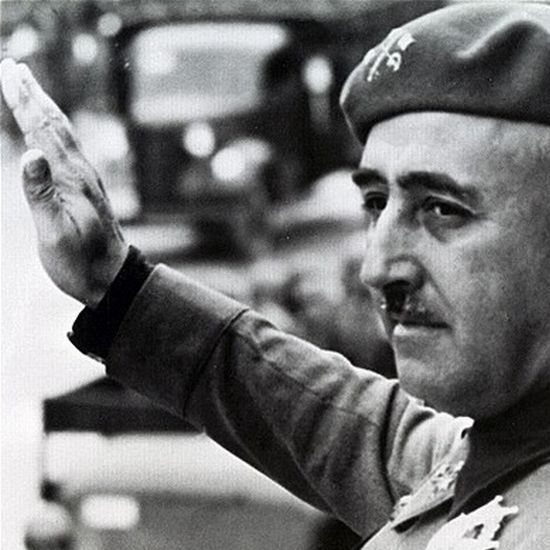
17 July 1936; A Moroccan Spanish Army which was led by Fascist General Franco declared war on Republic.
Note: "The issues of the 1930s, whether fought out within states or between them, were thus transnational. Nowhere was this more immediately evident than in the Spanish Civil War of 1936–39, which became the quintessential expression of this global confrontation." Eric J.Hobsbawm - Age of Extremes
Notes 2: "In fact, and contrary to the beliefs of this author's generation, the Spanish Civil War was not the first phase of the Second World War, and the victory of General Franco who, as we have seen, cannot even be described as a fascist, had no significant global consequences. It merely kept Spain (and Portugal) isolated from the rest of world history for another thirty years." Eric J.Hobsbawm - Age of Extremes