1950's. It was the end of great war and it had been a long time to great depression in USA. People had fun with Rhythm and Blues (R&B) which was evaluated from black gospels and soul. Blacks were naturally dominant in African-American music, record companies were in race with these musicians like Ray Charles and Ruth Brown. USA was like juke box great musicians and great songs were being written and as occured in nature, evaluation was on work for music while record companies were in a competition for survival.
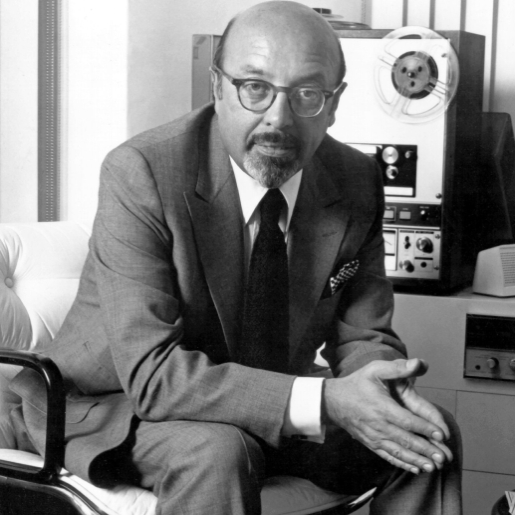
In 1951, big guy with 1,9 meter height and 136 kg weight signed a contract with Atlantic Records. That big guy's name was Big Joe Turner. Although his first performance was disaster at Apollo where the audience was known as toughest and critical, Ahmet Ertegun who was the vice president of Atlantic Records, motivated Turner and began to command him. “Chains of Love” and “Honey Hush” R&B hits followed this unexpected and unfortunate start.
Rock'n Roll's evolution was on its way, there were very hard competition, great singers like Big Joe Turner however there was still missed elements. Magical ears, song writer, sound engineer and of course ideas. They were all combined at Atlantic Records in 1950's. Ahmet Ertegun, Herb Abramson, Jerry Wexler and Jesse Stone. They were seeker, productive and innovative team.
At the end of One of their trips to New Orleans, Jesse Stone began trying to write the kind of music which he had heard there. “I listened to the stuff that was being done by those thrown-together bands in the joints down there, and I concluded that the only thing that was missing from the stuff we were recording was the rhtyhm. All we needed was a bass line. So I designed a bass pattern, and it sort of became identified with Rock'N Roll… I'm guilty person that started that…”
When we came to 1954, everything looked lide complete except lyrics. Jesse Stone wrote a song for Big Joe Turner. Later Jesse Stone said Herb Abramson (Ahmet Ertegun's first partner) had come to him before Turner's session at Atlantic, to say he wanted to find an up-tempo blues number for Turner to sing for a change. As Abramson was then in army in Germany, it must have been Ahmet who made the request. In Stone's words “I threw a bunch of phoenetic phrases together – shake – rattle – roll and flip – flop - fly and I came up with thirty or forty verses. Then I picked them together”
Shake, Rattle and Roll was recorded in 1954. It stayed in R&B charts for eleven weeks, its chorus was so simple and infectious even a child could sing it. Records followed Shake, Rattle and Roll one by one, the uptempo black R&B music was popular even for white men. It was playing in every pub and radio station. 1950's one of the most famous radio programme was Alan Freed's one on Cleveland Radio Station. Alan Freed had used “The Rock and Roll Session” to describe the amalgamation of rhythm and blues and country music he played during his show. As his radio show gained popularity, so too did the phrase.
Although it is still debateful, whether Elvis Presley's “That's allright Mama” song or Big Joe Turner's “Shake, Rattle and Roll” record was the first Rock'N Roll song, music was being changed. White young guys' black music was on its way. (Until the rise of Beatles and English music).