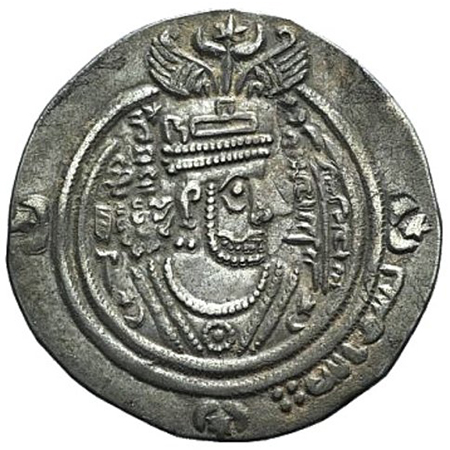
Muslim conquests that started in 633 ended in 751 for Persia and Transoxiana. Persian people who found one of the earliest Empires in the world Median Empire in 626 BC and lived as a subject of such a Persian Empire throughout these years, finally became a subject of another Empire by the mid of 8th century.
Though Persian people had developed a complex language and a culture which influenced their neighbours throughout their empire years, Muslim conquest brought destruction on them. A new religion converted almost every Persians with its theological and administrative innovations but mostly with its iron fist. From 8th century to 9th century all of administrative writings and belles-lettres was being written in Arabic. Pre-Islamic history of Persia was being forgotten though it is glorious. Especially under the reign of Umayyad, the power of iron fist was in its highest degree. The more orthodoxy brought more pressure on different cultures, languages and ideas.
However, at the end of Umayyad era, the other Caliphate state Abbasids was not as powerful as Umayyad. Though orthodoxy was available at the capital, heterodoxy was being blossoming at Persia and Transoxiana, hidden and mostly forgotten cultures like Persian, Zoroastrianism and Christianity even Hellenism began to emerge. Arabs administrative and militaristic sovereignty over Transoxiana and some parts of Persia ended by the foundation of Samanid Empire in 819. Samanid and later Ghaznavids became rival of Bagdad by their both militaristic power, arts, science and literature.
Deqans who were the Persian landowners and Aristocrats had been the main source of these old cultures. Ferdowsi who was born in 940 in Tus was a son of a Deqan. We have limited information about his early life and education. He died in 1020 but his name was not forgotten throughout centuries, he was called as "The Lord of the Word" and "The Savior of Persian Language". Though he probably created several poems, he owes these praises to his masterpiece Shahnameh.
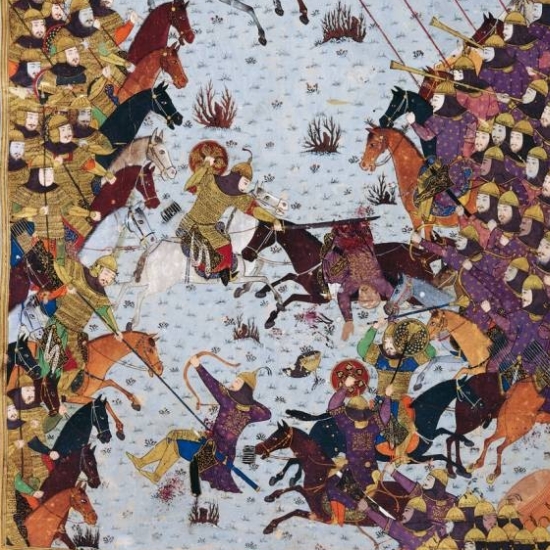
With more than 50.000 distichs (2-line verses), it is the longest poem have ever been written by single poet. Beside its length, its historical and mythological content is important too. The work is of the central importance in Persian culture since it narrates the past of Persian people from the creation of the world to conquest of Persia. It presented an alternative identity to Muslim identity for Persian people. It is one of the first Nationalist propaganda. He did it with pure Persian language which was not in use for several centuries. He used only 984 Arabic words in 50.000 distichs.
The Shahnameh is considered by many to be the most important piece of work in Persian literature. Western writers have also praised the Shahnameh and Persian literature in general. Persian literature has been considered by such thinkers as Goethe as one of the four main bodies of world literature.
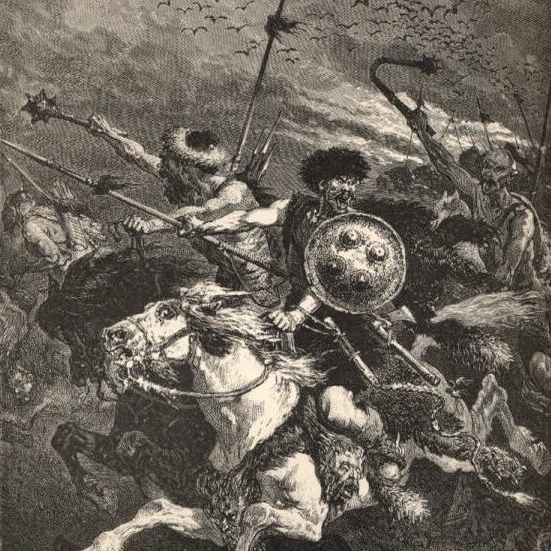
It influenced many civilizations. Even the Turanians of Shahname are Iranian Nomads, Turks connected their originnot with their original Turkish tribal history but with Shahname, especially during Seljuqs.
The Shahnameh's influence has extended beyond the Persian sphere. Professor Victoria Arakelova of Yerevan University states:
“During the ten centuries passed after Firdausi composed his monumental work, heroic legends and stories of Shahnameh have remained the main source of the storytelling for the peoples of this region: Persians, Pashtuns, Kurds, Gurans, Talishis, Armenians, Georgians, North Caucasian peoples, etc.”
Ferdowsi concludes the Shahnameh by writing:
I've reached the end of this great history
And all the land will talk of me:
I shall not die, these seeds I've sown will save
My name and reputation from the grave,
And men of sense and wisdom will proclaim
When I have gone, my praises and my fame.
According to legend which is written in Wikipedia,
Sultan Mahmud of Ghazni offered Ferdowsi a gold piece for every couplet of the Shahnameh he wrote. The poet agreed to receive the money as a lump sum when he had completed the epic. He planned to use it to rebuild the dykes in his native Tus. After thirty years of work, Ferdowsi finished his masterpiece. The sultan prepared to give him 60,000 gold pieces, one for every couplet, as agreed. However, the courtier Mahmud had entrusted with the money despised Ferdowsi, regarding him as a heretic, and he replaced the gold coins with silver. Ferdowsi was in the bath house when he received the reward. Finding it was silver not gold, he gave the money away to the bathkeeper, a refreshment seller and the slave who had carried the coins. When the courtier told the sultan about Ferdowsi's behaviour, he was furious and threatened to execute him. Ferdowsi fled Khorasan, having first written a satire on Mahmud, and spent most of the remainder of his life in exile. Mahmud eventually learned the truth about the courtier's deception and had him either banished or executed. By this time, the aged Ferdowsi had returned to Tus. The sultan sent him a new gift of 60,000 gold pieces, but just as the caravan bearing the money entered the gates of Tus, a funeral procession exited the gates on the opposite side: the poet had died from a heart attack.