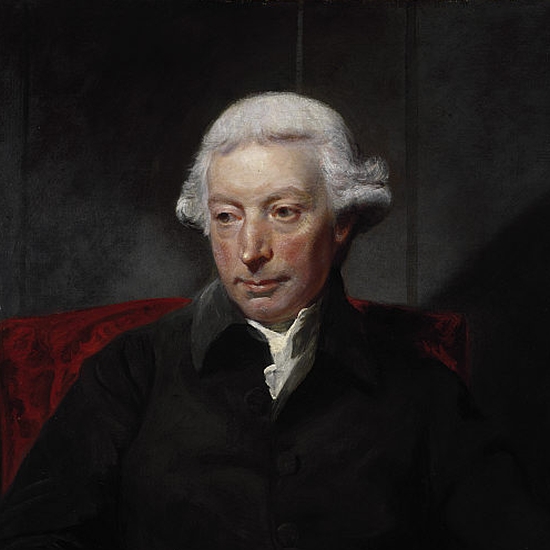
Adam Ferguson was an anti-utopian, agonistic liberal, historian, moral philosopher and the father of modern sociology.
He believed in that professions, division of labour, rise of self-interest, luxury and wealth which are products of commercial state, eliminated the ideal citizen of republic. And he tried to solve this problem throughout his life. He tried both republican pole and liberal pole. However, he never gave up defencing the idea of progress of human which idea would later affect Sir Charles Darwin and change the world.
Adam Ferguson was born in 1723 in Scotland. He graduated from University of Edinburgh and the University of St Andrews. He succeeded David Hume as librarian to the Faculty of Advocates which was an independent body of lawyers who have been admitted to practise as advocates before the courts of Scotland in 1757.
In 1767, he completed his work “An Essay on the History of Civil Society” whose part about division of labour influenced Karl Marx later. He claimed that,
- The private wealth and public virtue, the individual and the community can be reconciled.
- If the public good (kamusal mal, tükenmeyen ve rekabet dışı mallar) be the principal object with individuals, it is likewise true, that the happiness of individuals is the great end of civil society. For in what sense can a public enjoy a good, if its members, considered apart, be unhappy?
- There are two main conflicts. The first is between political and individual autonomy and rights.
- Political Autonomy: An individual who has political rights must possess “a certain share in the government of his country”
- Individual Autonomy: Denotes economic freedom and the individual right to private property and limited state.
- The second conflict is between spirit and material self-interest.
- He neither defends republican spirit and political autonomy nor defends liberal individual autonomy and material self-interest. Moreover, he claimed that a commercial state cannot save freedom without any regulatory sovereign and it is doomed to be collapse. However, it is not logical to look out for perfect-virtue.
In his maturity, his views began to be mature too, and his look to liberal state turned into favourable one while he marginalized republicanism as antiquarian and potentially dangerous. Like Hume, he described political autonomy as archaic and appropriate for small, rude, homogenous and militaristic states. Since he saw the danger of tyranny not in the private interests and the pursuit of profit but in prevalence of democratic power.(Majority) So he reformulated the task of state as that of being attentive to the security of the individual, the protection of property and the stabilization of a market economy.
During his intellectual life, he positioned himself sometimes as a defender of martial heroic citizen soldier and sometimes as a defender of liberal commercial citizen. However, his writings contain a compelling compound of ideas and intentions.
Plurality: He claimed that it is not rise just because of religion, it is also aroused by the differences beyond religion like modes of living, characters, labor etc. Since it is not just because of ideas but related in economic and social relations.
Friend and Enemy: Even though individuals and groups are divided by belief and opinion and are driven by their contingent passion and emotions, pluralism is ordered. Ferguson discovered a key structural form undergirding differences, that of the friend and enemy. Each term of the relation simultaneously consolidates(Strengthen) and threatens the identity of the other. As a result legendary summary comes
“What accounts for the social construction of identity is not sheer fact of pluralism or the postulation of class, religious, racial or ethnic foundations, but an enemy whose existence configures “bands of affection” reinforced in the practice of hostility, opposition and rivalry.”
Constitutive Character of Struggle: Ferguson approached political conflict as the central mechanism of political innovation and change as well as of incorporation and stabilization. Moreover it is simultaneously the main driving force of historical and social progress, the living foundation of freedom and the prod for individual development and improvement.
Legal order and Role of Political Institutions: The search for consensus is not only impossible but dangerous. No constitution is formed by concert, no government is copied from a plan they are the product of political struggle and strategic action. According to this he defined law as a treaty achieved through a process of strategic interaction among rival political groups that possess asymmetrical power.
The great irony was at just moment when in North America and Europe revolutionary actors sought to create modern states, Ferguson turned away and placed himself as a defender of constitutional monarchy and the British Empire.
He also wrote the article “History” for the second edition of Encyclopaedia Britannica.