“We can build all of the navy's irons by silver, ropes by silk, sails by satin”. These words are the Grand Vizier Sokullu's answer to Uluc Ali Pasha who said that it is hard to built a new navy at a short time.
1500's. Europe's politics were being changed. Pope was not as strong as hundred years ago, Protestant movements which were started and inspired by Martin Luther, from all over the Europe were threatining Pope and his authority. Especially England and northern Europe were protestan territories beside that there was new threat to Pope's authority, Spain which was being rised from western Europe.
America the New Land had been discovered 80 years ago. All of America's treasures, slaves, plants, foods and spices were being transferred by European sailors. Renaissance's sceptical, rational and scientific thinking was being reinforced by gold. Countries like Spain, Portugal were getting stronger day by day by these resources. Especially durign the reign of Charles I who was both kings of Spain and Holy Roman Empire. Charles I's aim was to unite Europe as catholic empire, such a big Catholic soverignty was reasonable rival and threat for Pope.
While Europe was being awakened in the west, Ottoman was in its the most powerful era in the east. Suleiman The Magnificient had enlarged the borders of empire. Although his Vienna invasion was not successful, Ottoman's were very big threat for Europe. At the end of Suleiman the Magneficient's reign in 1566, Selim II the Blonde was succeded to the crown as Philip II did in Spain. Philip II was also king of England as husband of Mary, who was the elder sister of Queen Elizabeth I, between 1554-1558 and king of Portugal between1581 – 1598.
Philip II as his father, was catholic and he directed his attention and forces to the North, where protestan movements were rised and threatened catholic Europe. However, it was not easy, Dutchs were in resistance under the command of William Orange. While Philip II was being tried to suppress northern europe protestan movements, in his home, Moriscos who had been forced to exile or to convert to Christendom in the begining of 1600's, revolted. The French government saw in Philip's religious and political trouble in northern Europe an opportunity to further the cause of Moslem Turkey. They began intriguing with the pirate states of the Barbary Coast of North Africa as well as with Turkish agents. To encourage the Turks even further, the French government began giving clandestine support to Turkish designs on the west. This was done originally solely to hurt Philip, but much of the influence in the Middle East that the French held through the twentieth century began at this time. Moriscos rebellion was suppressed and Spain focused on Turks.
Meanwhile, Ottomans wanted the control trade between Egypt and Istanbul thus, they invade the Cyprus which was the island of Ottoman's ally Venice. Venice looked help from Europe. However there were several reasons in order to refuse Venice. First of all, Venice had been a republic, secondly Venice had been ally of Muslim Ottomans and the last one was Venice had had profitable monopoly in the Middle East.
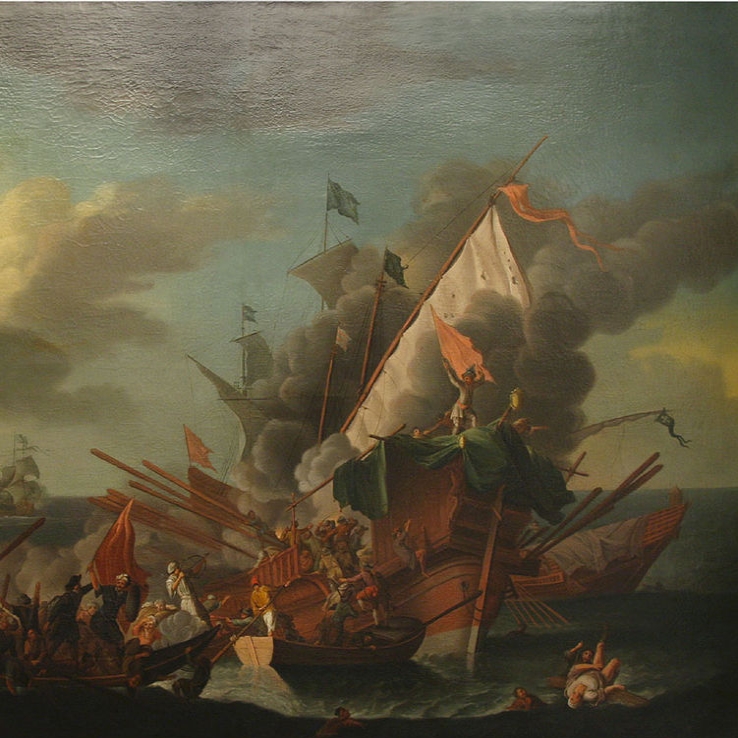
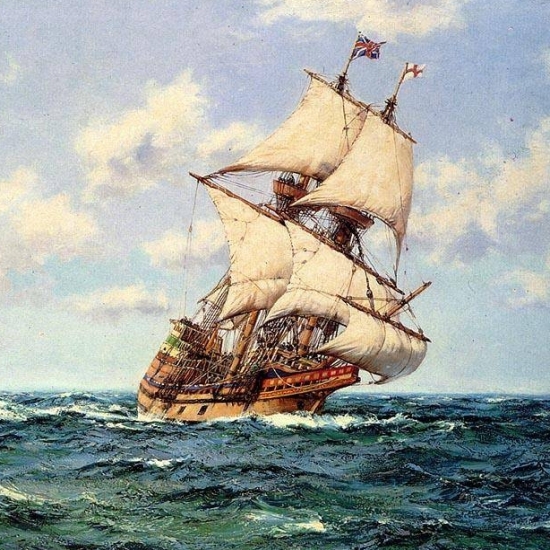
Only positive response was given by Pope, who was looking to regenerate souls of crusaders in Europe. Even though Philip II had not wanted to stand beside of Venice, Pope persuaded him. As a result, 208 galleys, 6 galleasses, more than 100 galleons, frigates and brigantines were assembled under the command of Spain. The galley of this time was powered by both sail and oars and looked little different than the ships of ancient Greece or Rome; it carried mainly soldiers. The galleons, frigates, and brigantines were sailing ships and carried more cannon than soldiers. The galleasses were a hybrid of both types of ship. The Turkish fleet was comprised almost totally of galleys. The standard method of naval warfare at the time was little different from land warfare. In battle, the ships closed with each other, and the soldiers on board fought for control of their own and enemy shipping. Thus, ships were captured much more often than they were destroyed.
While the forces of the Holy League were gathering, the Turks were busy at Cyprus. Since May 1571, the main fortress city of Famagusta had been under siege. It resisted until 1 August, when a lack of gunpowder forced a surrender. The Venetian commander of the city was tortured to death, and his officers were slaughtered. This both freed up the Turkish fleet for action and motivated the men of the Holy League when they learned of it. The Turks spent the next few weeks raiding the Greek islands and then massed at Lepanto, Greece, in the Gulf of Corinth. The Europeans docked for a time at Corfu and then (upon hearing news of the fate of Famagusta) sailed east in search of the Turks. Hearing of their approach, the Turkish fleet under Ali Pasha, reinforced with some Algerian ships under the command of Uluch Ali, sailed west toward the Gulf of Patras. At dawn on 7 October 1571, the two fleets sighted each other.
European's long and middle range cannons were killing Ottoman soldiers before boarding and when they boarded they were superior as a number. After 4 hours Europeans lost 12 galleys sunk and 1 captured whereas Ottomans lost 113 galleys sunk and another 117 captured.
Although it did not breake the naval might of Ottoman suddenly, Ottomans were not unbeatable anymore. Oceans were playland of Europeans, Ottomans' ships were not suitable such a long sailings, additionaly their vision was not suitable too. Ottomans lands and legendary silk road was enough for them however Mediterranean sea was started to be like oceans by this battle.
For many historians Decline of Ottomans were began at this defeat. Since, Ottoman's self confidence was very high, they could not investigate reasons of defeat. Instead of that, they argued that “We cut your arm with taking Cyprus, you shaved us by defeat us in Lepanto. Cut arm could not be regenerated, but it would grow more and dense instead of shaved beard.”
From a naval warfare point of view, Lepanto marks a turning point. Since before the time of Christ, the galley had ruled the seas, but its day was rapidly declining. The sailing ships that appeared in this battle were the wave of the future. They had more speed in the long haul than did galleys (although less for short distances), carried greater capacity for cannon, and were much more seaworthy. As an extension of land warfare, naval warfare fought by soldiers on the high seas saw its last major appearance at Lepanto. As shown by the battle between the English Royal Navy and the Spanish Armada 15 years later, cannon and sail replaced sword and rowers.