It was the end of World War I. There was a new ruling power in Anatolia after 650 years of Ottoman Empire soverignty. Turkish National Movement had fought against allied forces who invade Anatolia as a result of Treaty of Sevre, and they had proved and made Allied forced accept their soverignty in Anatolia.
Turkish National Movement commanded War of Indepence successfully both in militaristic and politic. Although movement lacked of militaristic, human, agricultural and industrial sufficient resources, they took advantage of allied forces' domestic problems and conflict between them and in 9 September1922 the last military units of allied forces (Greece in Izmir) were removed. After a while, 2 months later, allied forces and new Turkish Government met in Lausanne for negotiations. Even though allied forces invited Sultan of Ottoman Empire to strenghten their position, Turkish Government abolished sultanate, therefore Ottoman Empire could not be represented in Lousanne.
There were very tough topics in Sevre and Turkish Government's main aim to changed them.
In Sevre;
1 – Armenia would be recognized as a free and independent country and it's borders would be determined by US President Wilson.
2 – Ottoman Empire's land would be divided into pieces among allied forces.
3 – Iraq became a mandate of Britain: all oil concession in the region was to be given to the Turkish Petroleum Company (TPC), which was controlled by the British.
4 – One of the main points of the treaty was the plan to establish the ‘Zone of Straits.' Navigation was to be allowed in Dardanelles in time of peace and war to all vessels. No act of war could be committed there, and no blockade could occur the area unless otherwise decided by the League of Nations.
5 – the Ottoman Empire was limited to 50,000 men, restricted the right to air force, and was to only have 7 sloops and 6 torpedo boats.
6 – Kurdistan region would be scheduled to have a referendum to decide its fate, which, according to Section III Articles 62–64, was to include the Mosul Province.
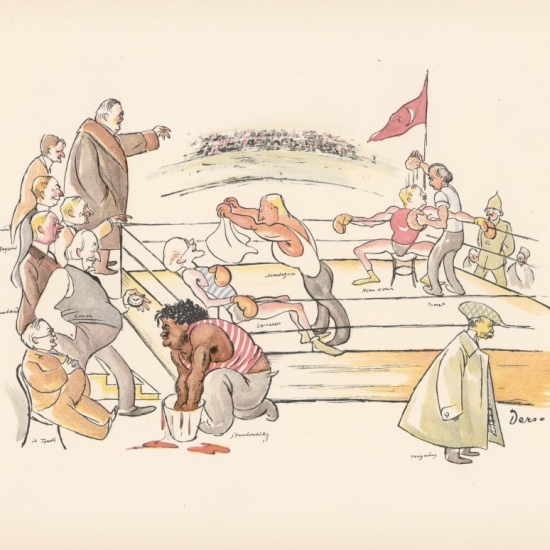
It took 3 months and it end with Turkish Government's protest. Both parties could not agree in capitulations, Mosul and Istanbul subjects.
Turkish Government started to prepare new war, and USSR announced that they would fought next to Turkish Government against Allied Imperialist Powers if there would been war again. On the other hand, both Turkish Government, USSR and allied forces did not ready such a big war again. So both parties met in Lousanne in 23 Aprik 1923 again and after long debates, treaty was signed by both parties in 24 July 1923.
The treaty was ratified by Turkey on 23 August 1923, Greece on 25 August 1923, Italy on 12 March 1924, Japan on 15 May 1924, Great Britain on 16 July 1924. The treaty came into force on 6 August 1924, when the instruments of ratification had been officially deposited in Paris, France.
As a result of Treaty,
1 – The treaty provided for the independence of the Republic of Turkey
2 – Capitulations were totally removed.
3 – Border of Iraq could be resolved and it was postponed due to next meeting between Turkish Govrenment and British Empire.
4 – Border of Greece was accepted as Armistice of Mudanya which was signed in 14 October 1922 between Greece and Turkish Government.
5 – Both Aegean Islands, except Bozcaada and Gokceada, was accepted as Greece islands, Bozcaada and Gokceada though Turkey did not obey, accepted as self-governing islands.
6 – Except Greek people in Istanbul, all of minorities were accepted as Turkish citizen. All of their previous priviliges were removed. Parties decided to exchange Greek people in Istanbul and Turkish people in Thracia.
7 – All war reparations were erased, only Karaagac province was left to Greece.
8 – Ottoman depts were divided between countries who share Ottoman Lands.
9 – Turkish government permitted activities of Foreign Schools under Turkish Laws.
10 – Turkish government permitted Patriarchate without its political authorities.
11 – Armenia subject was not mentioned in Lousanne.
12 – Bosphorus subject was one of the most debated subject in negotiations, it had solved in 1936 with Treat of Montro.
Turkey was represented with Ismet Inonu while Lord Curzon for British Empire and Allies, Venizelos for Greece.