The term utopia was firstly coined in Greek by Sir Thomas More for his 1516 book Utopia, describing a fictional island society in the Atlantic Ocean. As the meaning of it's name(no-place), novel was describing a island which was not exist and seems like it could not be existed. As though North Star guide to sailors in darkness with shining, utopian novels guide to societies. And though father of these type novel's name is Sir Thomas More, the first example of these novels is Pluto's The Republic.
While utopias are sources of hope, another type of novel (Dystopian) which describes undesirable and frightening societies emerged in late of 1800's. Dystopias are often characterized by dehumanization, totalitarian governments, environmental disasters.
A place which is not exist, can be utopia or dystopia. What if it would be both of them at the same time.
When Aldous Huxley published his novel Brave New World in 1932, it was seen like dystopia, however in 2000's we are still discussing whether it is utopia or dystopia. As in many dystopia, there are dehumanization and totalitarian government in Brave New World, however on the other hand people are happy as in many utopia.
These are few interesting and attractive points from the World of Brave New World:
Social Classes: Homosapiens naturally could not imagine a World without social classes as a specie of an ape. It does not matter utopia or dystopia, every imaginery Worlds have social classes as real World. However there is an important difference in the World of Brave New Worls, there is not any struggle between social classes since men are designed for to be fit in their planned social classes. As a result, people are happy with their classes and do not envy the other classes as though they live in utopia on the other hand they are designed dehumanized people as though they live in dystopia.
Individulism:
Family: There are not any family or parents. People of New Brave World consider family like a rabbit hole and say “what dangerous, insane, obscene relationships between the members of the family group! Maniacally, the mother brooded over her children ( her children) … brooded over them like a cat over its kittens; but a cat that could talk, a cat that could say, “My baby, my baby,” over and over again. “My baby, and oh, oh, at my breast, the little hands, the hunger, and that unspeakable agonizing pleasure! Till at last my baby sleeps, my baby sleeps with a bubble of white milk at the corner of his mouth. My little baby sleeps …”
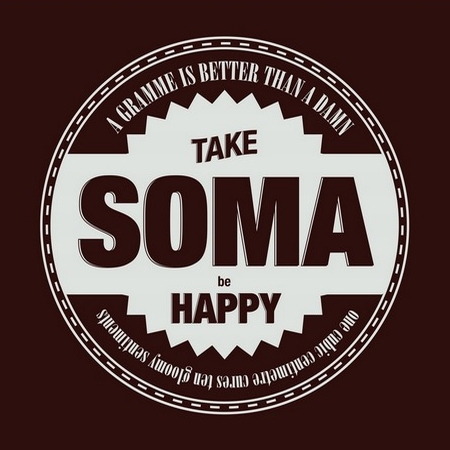
Happiness: It is the easiest thing in Brave New World cause you can be happy with few grams of SOMA tablets which are healthy and guarantee happiness. So if you were happy why would you look for another thing? Are you a dualist?
Savages: Savages live out of the Brave New World. In their World there are social classes, sacrifices, diseases, dirt, properties (the most important propert is woman), hunger. But they are happy since they are human, are they?
The other point which I thought during my reading is they seem like middle Eastern societies.
Love & Sex: Love, if we summarize love as to HAVE partner who you focus on, there is not any love. Since citizens of Brave New World do not “HAVE” partners, they have temporary partners. Sex is for enjoyment not for proliferate.
Art: This is the summary of art in Brave New World
“Othello's good, Othello's better than those feelies.”
“Of course it is,” the Controller agreed. “But that's the price we have to pay for stability. You've got to choose between happiness and what people used to call high art. We've sacrificed the high art. We have the feelies and the scent organ instead.”
In 1932 Aldous Huxley published his book, and we still watch movies and read novels which are inspired from it like Matrix, Divergent, Aeon Flux etc.