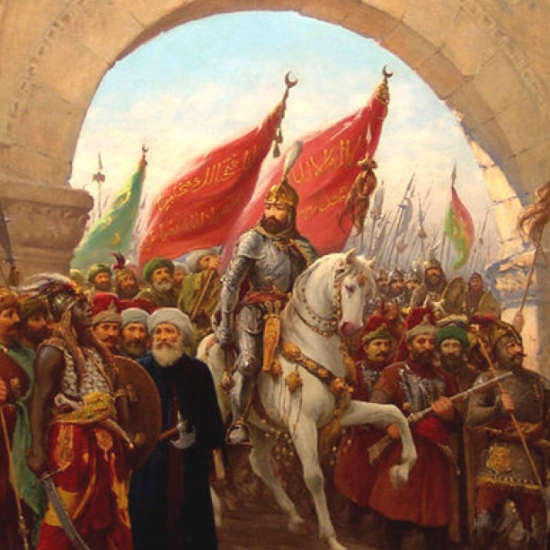
It was the beginning of the new era for Muslim lands in Transoxiana. There was a new ruler after Umayyad and Abbasid eras, Seljuqs.
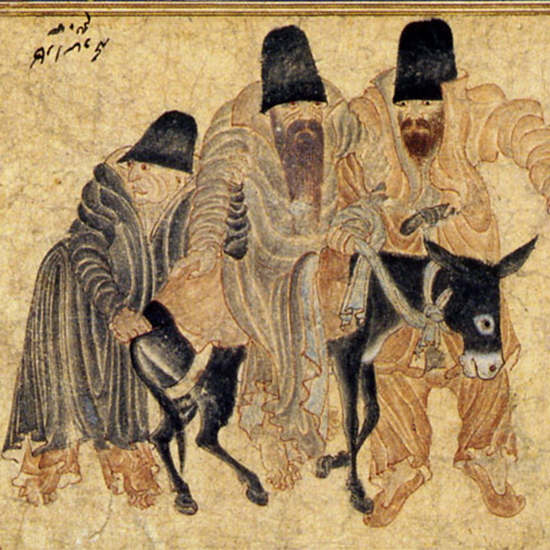
Seljuqs were nomadic people originated from the Qynyq branch of Oghuz Turks. Their first leader Seljuk was a commander in Khazar Empire, and probably was a Jew. He had four children with Israel, Michael, Moses and Jonah names.
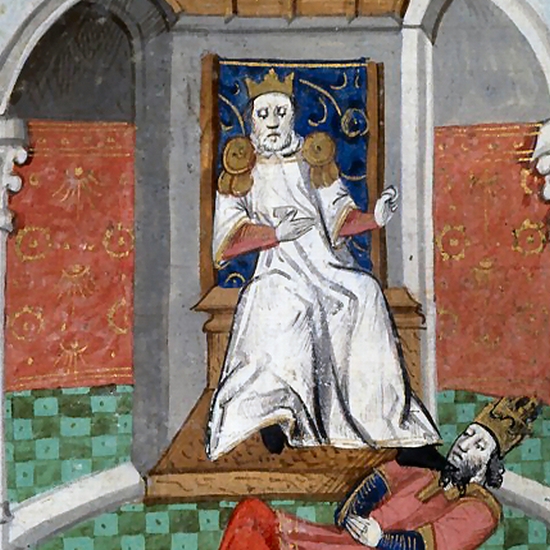
However, Seljuk Empire was founded by Tugril Bey who was the son of Michael in 1037. Nishapur was the first capital of Seljuk Empire. However there was a problem about sovereignty of new ruler. People who live in Transoxiana were mostly Muslims. Tugril Bey was clever and he had known that if you want to rule people either they should convert to your religion or you should. Hence, he negotiated with Caliph and he converted to Islam in return for recognition of Himself as Sultan by Caliph.
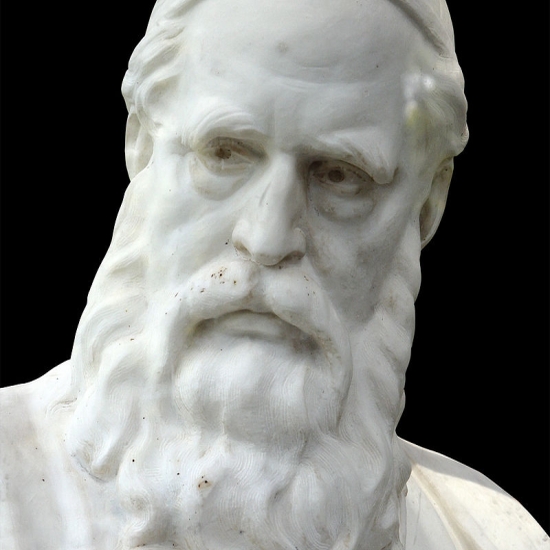
Omar Khayyam (Omar The Tent Maker) was born in 1048, 11 years after of Seljuk invasion. Nishapur was a capital of Seljuk Empire and it was a crossroad between East and West. Hence, as most of Persia it was the place that many Greek ideas influenced by Orient. On the other hand Sufizm which offers to profess poverty was one of the main streams in Khurasan and as a result of invasion, taxation and exploitation, poverty was not a choice, it was unavoidable. But in Sufizm the difference between physical and psychical worlds are not evident, and according to Sufi Elect, if once the perfect knowledge of God had been attained then the world God created was both to be enjoyed and to be made tolerable for Sufi's fellow. (Abu Sa'id) Whether Sufizm is tolerable to enjoyment or not, it was the subject of Sufizm before Seljuk invasion. Al-Gazali who was born in 1058, was one of the most influential thinkers who insisted to conform Sufizm to common laws of Islam. He had rejected Greek Ideas and its fellows like Avicenna and Omar Khayyam.
Omar was a child of middle class family who were tent-makers. He studied under great teachers in Khorasan, he was a successful and inquisitive student. He learned mathematics and astronomy. Throughout his life, Omar Khayyam was tireless in his efforts; by day he would teach algebra and geometry, in the evening he would attend the Seljuk court as an adviser of Malik-Shah I, and at night he would study astronomy.
Omar Khayyam was one of the few greatest Muslim mathematicians ever born. He wrote the influential Treatise on Demonstration of Problems of Algebra (1070), which laid down the principles of algebra, part of the body of mathematics that was eventually transmitted to Europe. In particular, he derived general methods for solving cubic equations and even some higher orders.
On the other hand he completed Jalali calendar, which is based on Sun and still in use in some in Iran and Afghanistan.
He was also one of the first man who studied in meteorology. He had advised hunting or something else activities to Melik Shah according to the weather.
However, beside his legacy on maths and astronomy, he is well known with his ruba'iyat. Ruba means a poem which is consisted from four lines while ends of first, second and the last lines are in accordance the third one ends with different.
Although only 10th, 11th and 44th ruba'is are considered as originally Khayyam's, since their records are dated 45 and 75 years after death of Khayyam. All of the other ruba'is are suspicious that they can be ruba's of Khayyam's contemporary poets.
Omar Khayyam had several philosophical works which mostly related with Aristotelian and Avicenna. Summary of his philosophy and rubaiyyat consists of three main questions which are same with Aristotelian. Is it? What is it? Why is it?
As most of medieval philosopher Omar Khayyam had believed that the God is necessary being. Khayyam differs from his contemporaries with his offers about three arguments to exonerate God from being the origin of evil by identifying evil with non-existence or absence. God, Khayyam argues, has created the essences of all the contingent beings, which are good in and of them since any being, ontologically speaking, is better than non-being. Evil therefore represents an absence, a non-being for which God cannot be blamed. Since
Khayyam influenced Pre-Raphaelistics whose intention was to reform art by rejecting what it considered the mechanistic approach first adopted by mannerists (Raphael – Michelangelo) and this popularity led to formation of the Omar Khayyam Club of London in 1893. In America, Umar Khayyam was well received in the New England area where his poetry was propagated by the official members of the Omar KhayyÄm Club of America. The academic community discovered Khayyam's mathematical writings and poetry in the 1880's, when his scholarly articles and translations of his works were published. Some, such as William Edward Story, praised Umar as a mathematician and compared his views with those of Johannes Kepler, Gottfried Wilhelm Leibniz, and Isaac Newton, while others drew their inspiration from his literary tradition and called themselves “Umarians.” This new literary movement soon attracted such figures as Mark Twain.
Khayyam was maybe seen as a bridge between materialistic world and the opposite one. While he denotes the life after death, he usually describes heaven in real world as such a materialist. On the other hand he uses the tongue of spiritualism while describing to be within greater existence nature or God. While western people who could not find happiness in materialistic world are influenced by Omar Khayyam, Eastern people who look to the world just like an examination place, denounce him.
10
The cycle which includes our coming and going
Has no discernible beginning nor end
Nobody has got this matter straight
Where we come from and where we go to
11
Since the Upholder embellishes the material of things
For what reason does He cast it into diminution and decay
If it turned out good why break it
If the form turned out bad whose fault was it
44
The parts of a cup which are joined together
The drunkard does not hold it lawful to break
So many delicate heads legs hands
Through whose love were they joined by whose hatred smashed