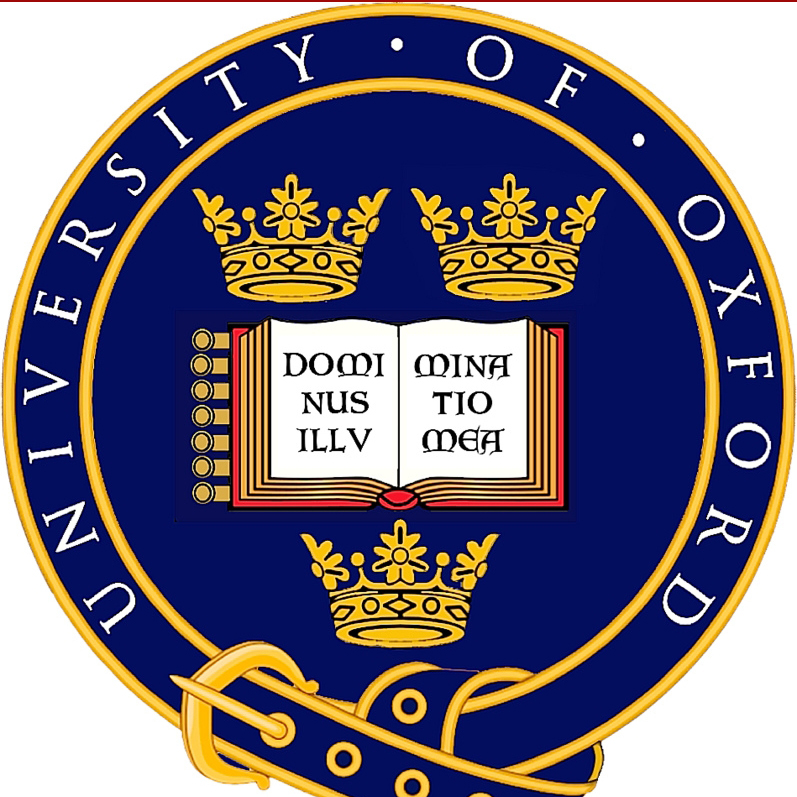
Dominus Illuminatio Mea / The Lord is my Light
University of Oxford has been founded in 1096. It is the oldest university in English speaking World and second in whole World where the oldest university id University of Bologna (1088).
There were teaching activities from 1096 to 1167, however when Henry banned English students' attandence to University of Paris in 1167, Oxford university began to grow.
Oxford townsfolk was uncomfortable with Oxford's students and there were disputes between them, because of these conflicts some of the academics of Oxford decided to flee from Oxford and they established Cambridge University in 1209 which will be biggest rival of Oxford. (they are called Oxbridge)
Head of university has taken a name as chancellor in 1201.
Student Houses of Oxford has began in 11th century according to students geographical origins as North (Scotland included) and South (Welsh and Ireland included). Religious houses like Augustinians, Dominicans, Franciscans and Carmaletes followed these houses and when we came to mid 13th cerntury first benefectory houses has been founded. (John I de Balliol, father of the future king of Scots.)
Oxford had a big importance during 17th century, first of all its statutes were reformed by William Laud who was archbishop of Charles I and architecture of several reasons of Civil Wars which would remained until the mid 19th century. But the most important reform was he grant charter to secure privileges for the university press. University was also a center or Royalist party during civil war however both Cambridge and Oxford were protected by Cromwell after civil war from puritans who thougt university teachings were dangerous for religion.
Administrative reforms during the 19th century included the replacement of oral examinations with written entrance tests, greater tolerance for religious dissent, and the establishment of four colleges for women. Women have been eligible to be full members of the university and have been entitled to take degrees since 7 October 1920.
Although the University's emphasis traditionally had been on classical knowledge, its curriculum expanded in the course of the 19th century and now attaches equal importance to scientific and medical studies.
The mid twentieth century saw many distinguished continental scholars displaced by Nazism and Communism who were to find academic fulfilment in Oxford. The list of distinguished scholars at the University of Oxford is long and includes many who have made major contributions to British politics, the sciences, medicine, and literature. More than forty Nobel laureates and more than fifty world leaders have been affiliated with the University of Oxford.
There are 38 collegues and 6 PPH (Permanent Private Halls) in Oxford. Although their core responsibilty is provide accommadition, they provide tutorials and culture to students. Most of them are more than 100 years old while some of them reach 800 years. Every student has to participate to one collage as done in Harry Potter. (St Edmund Hall, Exeter College, 1314 etc.)
Famous Oxonians
Sir Thomas More, Lord Chancellor and martyr
Adam Smith, political economist
John Locke, philosopher
Robert Hooke, scientist
Thomas Hobbes, philosopher
William Harvey, scientist who discovered the circulation of the blood
Edmund Halley, astronomer
Edward Gibbon, historian
John Ford, playwright
William Henry Drayton, American revolutionary
Oscar Wilde, playwright, poet and author
Arnold Toynbee, social philosopher and economist
J R R Tolkien, author and academic
Aldous Huxley, author
Professor Stephen Hawking, physicist
Hugh Grant, actor
Indira Gandhi, former Prime Minister of India
Bill Clinton, former President of the United States
Tony Blair, former British Prime Minister